lunes, 14 de septiembre de 2026
martes, 10 de marzo de 2026
lunes, 8 de diciembre de 2025
USA - El futuro de la agricultura eléctrica está tomando forma en John Deere [video]
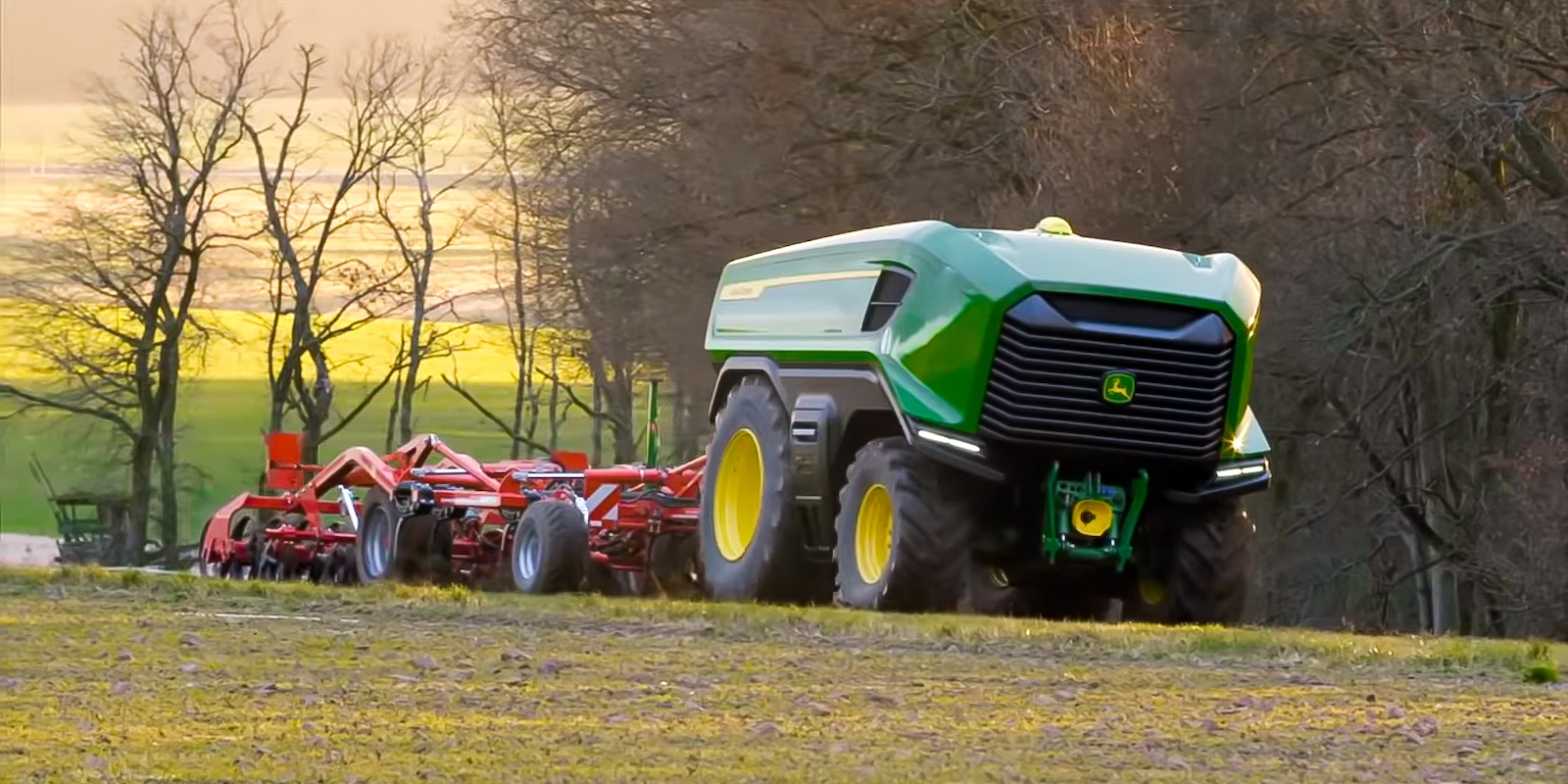
La independencia energética y el control de costos son lo más importante para los agricultores, y más empresas están implementando equipos eléctricos que pueden ser cargados por la energía solar, eólica o incluso el biogás en la granja. Con el debut de su último tractor eléctrico de próxima generación en Agritechnica el mes pasado, John Deere está señalando que tiene la intención de liderar esa revolución.
John Deere dice que los prototipos de tractores eléctricos E-Power que han estado provocando silenciosamente desde 2022 serán tan silenciosos como un automóvil, tan fáciles de conducir como un carrito de golf, y requieren un mantenimiento mínimo, y todo mientras proporcionan el mismo rendimiento que los queridos tractores diesel de la compañía.
“Nuestro objetivo con el tractor E-Power es garantizar que realice los mismos trabajos que sus homólogos diesel y trabaje con los mismos implementos, al tiempo que desbloquea valor incremental”, explica Derek Muller, gerente comercial de sistemas de vehículos eléctricos a batería en John Deere. “A través de nuestra línea eléctrica, buscaremos reducir los costos operativos y de mantenimiento, ofrecer un rendimiento potente y confiable y un funcionamiento intuitivo”.
El último prototipo de tractor eléctrico John Deere, recientemente presentado en Agritechnica, está equipado con un motor de accionamiento de 100 hp y dos motores adicionales. Un motor eléctrico de 130 caballos de fuerza continua para la toma de fuerza, y un tercero para la bomba hidráulica. Extraerán energía de hasta cinco paquetes de baterías de iones de litio KREISEL, lo que permitirá a los clientes una flexibilidad significativa de precios en función de su capacidad para determinar cuánta energía y tiempo de funcionamiento necesitan (y están dispuestos a pagar) para hacer su trabajo.
Tractor eléctrico John Deere

La personalización irá mucho más allá del tamaño de la batería. Deere planea ofrecer a los clientes una serie de diferentes opciones de tractores y equipos, y mantener los costos competitivos basándolos en una arquitectura común de vehículos.
“John Deere tiene como objetivo desarrollar un único concepto eléctrico que los clientes puedan configurar a sus propias necesidades”, escribe Bob Karsten, de Future Farming. “Los compradores podrán elegir el número de baterías (hasta cinco, con un total de 195 kWh), el tipo de eje (pista estrecha o ancha) y la cabina (ya sea una cabina de huerto o la cabina familiar de 5M). En esencia, los compradores seleccionan su capacidad de batería preferida. Con la batería más grande (195 kWh), el tractor puede funcionar durante ocho horas. El objetivo es permitir una carga rápida de hasta el 80% en 30 minutos”.
Deere reveló una versión de ese próximo tractor eléctrico (arriba) en Agritechnica la semana pasada, pero a pesar de ser un prototipo temprano, es una pieza completamente funcional que ya se ha visto de servicio con algunos de los clientes más confiables de John Deere.
- Daniel, un cliente de un huerto de California, dijo que su experiencia con el tractor eléctrico lo llevó a creer que podría ayudar a facilitar la capacitación de nuevos operadores: “Creo que el tractor es mucho más fácil para los conductores entenderlo y conducirlo. Se necesitaría menos tiempo para enseñarles [a los operadores] cómo usarlo”.
- Tyler, un cliente de viñedos en California, cree que un nuevo tractor eléctrico podría ayudar a su operación a cumplir con sus objetivos de sostenibilidad: “Cuando observamos nuestra huella de carbono, las emisiones de gases de efecto invernadero, queremos tratar de reducirlas a medida que manejamos nuestro equipo para cultivar nuestros viñedos, queremos ser conscientes de la comunidad en general”.
Todavía no hay una palabra oficial sobre cuándo la nueva plataforma de tractores eléctricos John Deere comenzará a llegar a los clientes, pero la reciente compra de Big Green del fabricante de baterías KREISEL y su continuo impulso a más mercados globales significa que no puede permitirse tomar las cosas con calma.
Puede ver una caminata rápida y virtual del concepto de tractor eléctrico E-Power de John Deere en este video (admitidamente más antiguo) publicado alrededor de la ACT Expo, y esperar más detalles y configuraciones posibles en la próxima conferencia CON / AGExpo en marzo.
Configuraciones de John Deere E-Power
https://electrek.co/2025/12/06/the-future-of-electric-farming-is-taking-shape-at-john-deere-video/
viernes, 15 de agosto de 2025
martes, 15 de julio de 2025
sábado, 21 de junio de 2025
sábado, 22 de julio de 2023
Retroexcavadora China 100% electrica - Shantui SD17E. Electric driven. No exhaust
- Shantui goes electric.
- Here you can see the SD17E bulldozer at work.
- No exhaust. Heavy load working time 4-5 hours,
- Standard load 6-8 hours.
- Cab noise 76 db.
martes, 8 de diciembre de 2020
viernes, 18 de septiembre de 2020
miércoles, 16 de septiembre de 2020
La retroexcavadora eléctrica Breton de NEM Motors ya se fabrica en serie en China
La incursión de la electricidad en la maquinaria pesada poco a poco se va viendo materializada de mano de la llegada de nuevos modelos al mercado. La retroexcavadora de NEM Motors Breton ya se fabrica, con una primera tirada de 1.500 unidades dispuestas a salir a la venta.

No nos equivocamos demasiado afirmando que, lo más seguro, es que el futuro de las herramientas de trabajo en campo está encaminado en su totalidad a pasarse a la electricidad. Así lo aprobarían las retroexcavadoras eléctricas Breton que NEM Motors está ya fabricando y que serán vendidas masivamente en breves.
No es la primera herramienta de trabajo eléctrica que pasa por nuestra portada, y a buen seguro tampoco será la última. Hace dos semanas generó mucho interés a su paso por nuestra web el tractor eléctrico de Solectrac, la empresa californiana especializada en la electrificación de tractores ligeros y pesados. Otra retroexcavadora que pasó por nuestra portada fue la CASE 580 eléctrica, algo más capaz que la protagonista de hoy.
Hoy la imagen que ocupa nuestra portada es, sin duda, una muy buena noticia para el sector, ya que la fabricación de las palas eléctricas cargadoras de Breton, supondría la entrada al masivo mercado chino de uno de los distribuidores de maquinaria de construcción más importantes de China, Gangjia.
Según informa el medio chino especializado en coches eléctrico EVHui la primera tirada ya estaría completamente fabricada, con un total de 1.500 unidades de la pala cargadora eléctrica ya listas para afrontar los primeros trabajos a pie de obra.
Las características técnicas que ofrece la retroexcavadora de Breton ofrecen unas prestaciones acordes, cuanto menos, a los trabajos a realizar. Lo más llamativo, sin duda, y lo que sin duda llamará también más la atención a sus posibles clientes es que por cada carga rápida necesitará tan sólo una hora, lo que se plantea como un tiempo correcto para, por ejemplo, recargar la retroexcavadora durante la pausa de mitad de jornada. A cambio de esa hora de carga, los trabajadores gozarán de cinco horas de uso intensivo de la herramienta.
El paquete de baterías que equipa la retroexcavadora eléctrica de Breton es una incógnita, pero sí han desvelado datos de potencia y capacidad de carga. Contará con un motor eléctrico que trabajará a bajas revoluciones, 200 revoluciones por minuto exactamente (no necesita de más), y una potencia de 160 kW que se complementado por un descomunal par motor de 2000 Nm. Gracias a ello es capaz de portar cargas de hasta 5.000 kilos.
Anuncia la firma que el coste que supone en un día de trabajo el uso de esta retroexcavadora eléctrica conforme a una términa tradicional se reduce en unos 1.200 yuanes al día (unos 150 euros al cambio actual), lo que supondría un ahorro del 70% diario.
Es poca, por no decir nula, la información dispuesta de la retroexcavadora eléctrica de Breton en todo internet, por lo que de encontrar más detalles de esta herramienta de trabajo eléctrica en las próximas semanas, ampliaremos información en otro artículo.
viernes, 17 de julio de 2020
The Rise of Electric Vehicles 2020 Is Gaining Momentum Worldwide
QUICK VIDEO SUMMARY:
2. Electric Passenger Ship
3. Volkswagen On Electric Vehicles
4. Eco-Friendly Two-Wheeled Vehicle
5. Ford’s New Electric Mustang
6. Driverless Electric Tractor
7. Mazda's First Electric Car
8. Electric Cargo Ship
jueves, 9 de abril de 2020

lunes, 16 de marzo de 2020
RetroExcavadora Electrica; CASE Introduces the Industry's First Fully Electric Backhoe Loader
martes, 3 de septiembre de 2019
JCB Electric Excavator | Fully Charged
domingo, 27 de enero de 2019
China's first driverless electric tractor starts working
sábado, 15 de diciembre de 2018


lunes, 29 de octubre de 2018
viernes, 19 de mayo de 2017
Renewable Energy Is Unstoppable, Declares Financial Times

https://cleantechnica.com/2017/05/19/renewable-energy-unstoppable-declares-financial-times/